How AI Coding Assistants Are Empowering Process Improvement Architects to Build Better Software
Artificial intelligence has sparked an enormous conversation around software development. Much of that discussion centers on one question:
Will AI replace software developers?
After spending the past several months building three very different software projects using OpenAI Codex and Anthropic Claude, I came away with a very different conclusion.
The more interesting question is:
How do AI coding assistants change who gets to participate in designing software?
Through the development of Optidata, Battery Point Consulting, and The Zarmonic Zeries, I found that Codex and Claude did much more than generate code. They dramatically reduced the gap between operational expertise and software execution, allowing a process improvement architect to iteratively shape interfaces that reflected logical workflows rather than merely documenting them for someone else to implement.
The theoretical result wasn’t fewer software developers.
The result was a more efficient collaboration between domain experts, designers, AI, and engineers.
Three Projects, Three Different Challenges
To explore the capabilities of modern AI coding assistants, I intentionally (and sometimes accidentally) applied them across three completely different projects.
Optidata
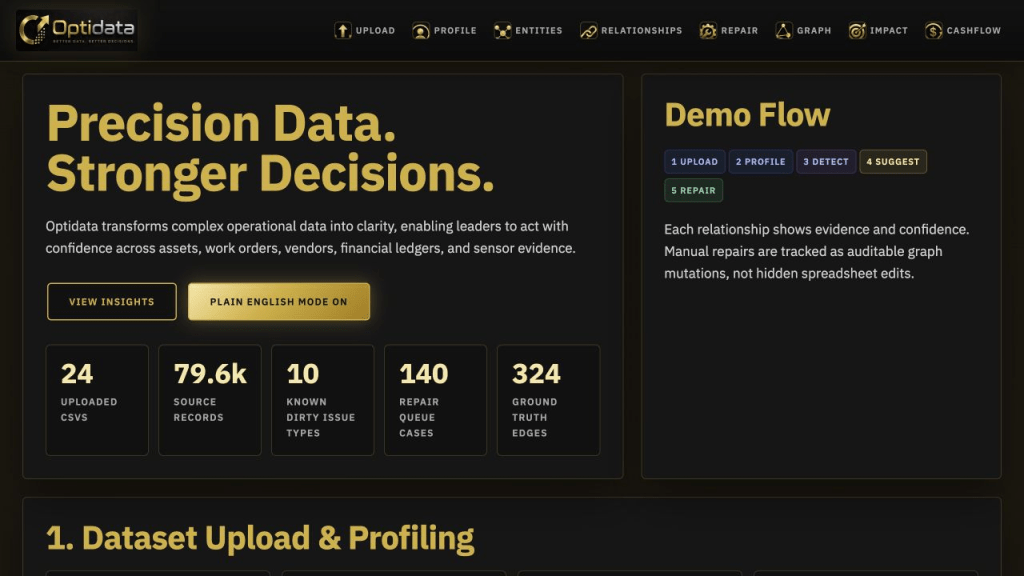
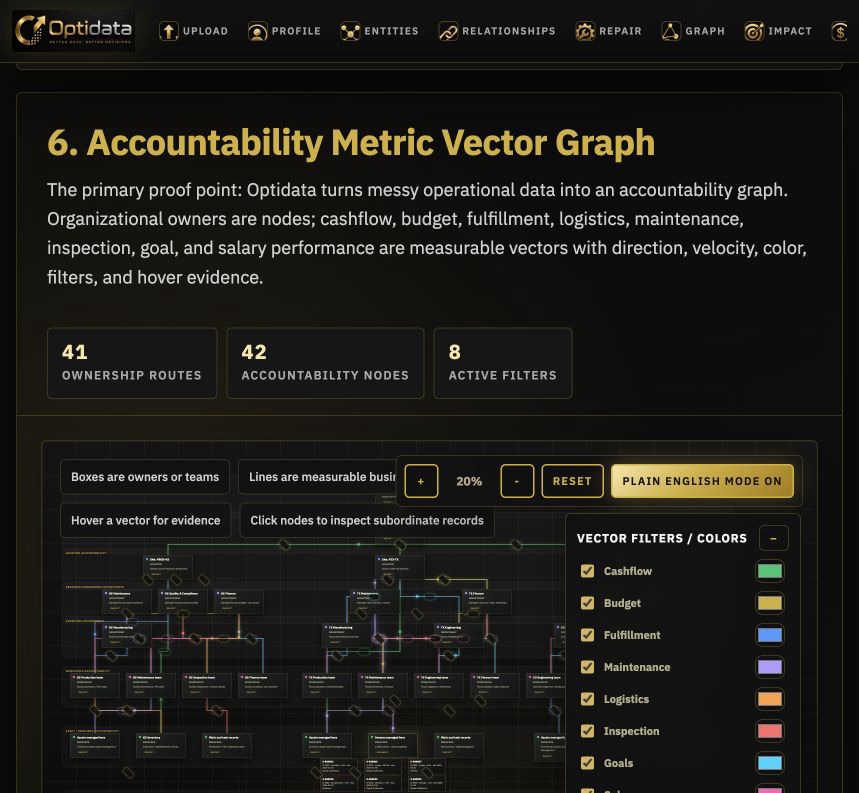
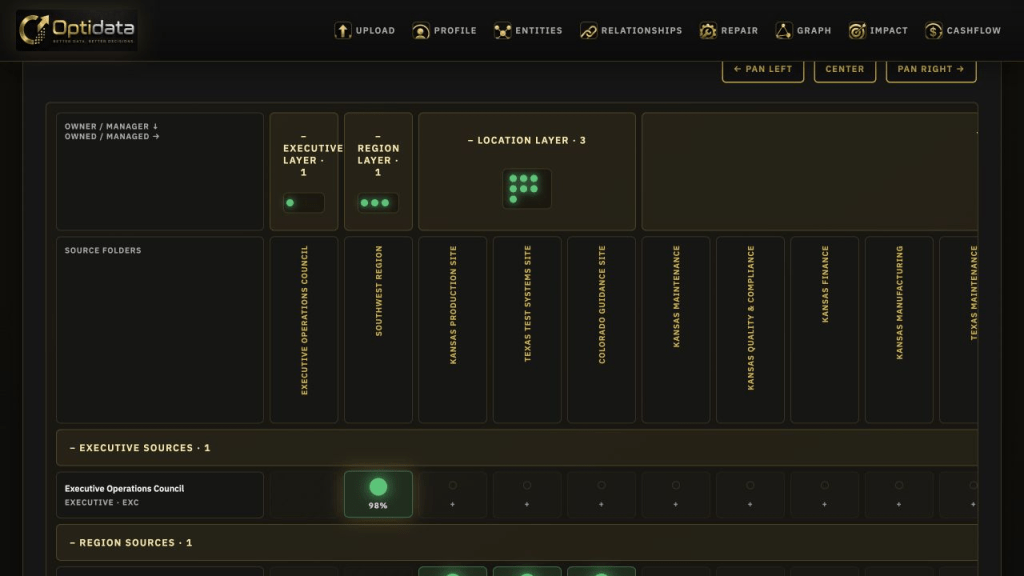
Optidata is a relational industrial intelligence platform designed to help organizations understand complex operational systems.
Instead of organizing information around disconnected dashboards and reports, Optidata modeled equipment, employees, maintenance records, financial systems, assets, and operational events as interconnected entities within a relationship graph.
The challenge wasn’t simply displaying data.
It was designing software that helped people understand systems.
Rather than writing lengthy specifications and waiting for implementation, I was able to continuously experiment with navigation, relationship visualization, information hierarchy, executive dashboards, graph interaction, entity exploration, and workflow organization. Many ideas that would have been discarded due to development cost could simply be built, evaluated, improved, or abandoned within hours.
Battery Point Consulting
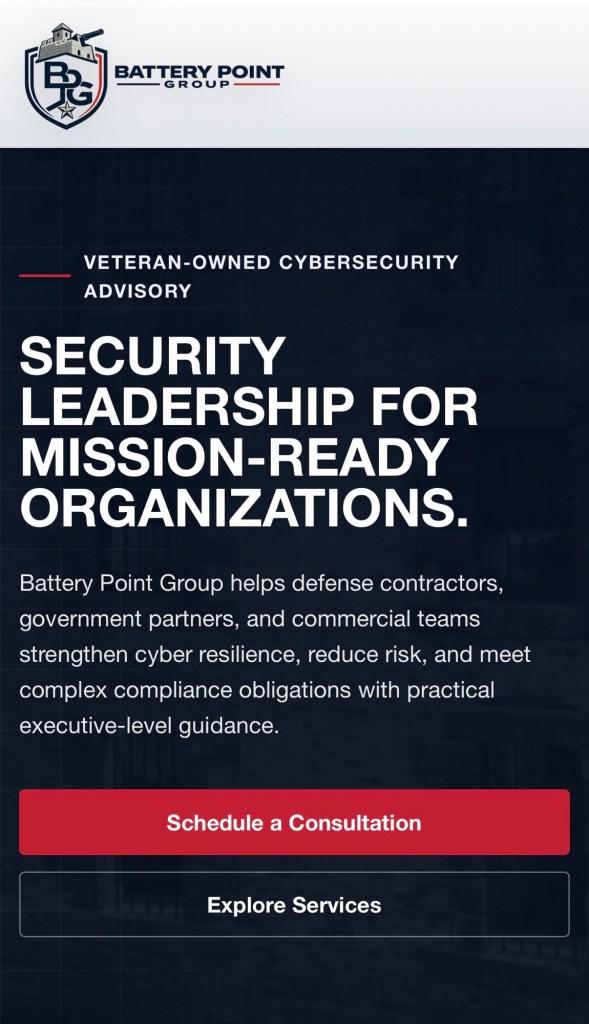
Battery Point Consulting presented an entirely different challenge.
Rather than industrial software, this project involved building a professional website for my father’s consulting business.
The objective shifted toward communicating expertise, credibility, professionalism, and trust while guiding prospective clients toward meaningful engagement.
Instead of operational workflows, the focus became communication, branding, layout, typography, and information hierarchy.
Although technically much simpler than Optidata, the design process followed the same pattern: rapid iteration. Multiple homepage layouts, typography combinations, navigation systems, and visual identities could be explored until the final product reflected the business rather than simply following conventional web design templates.
The Zarmonic Zeries
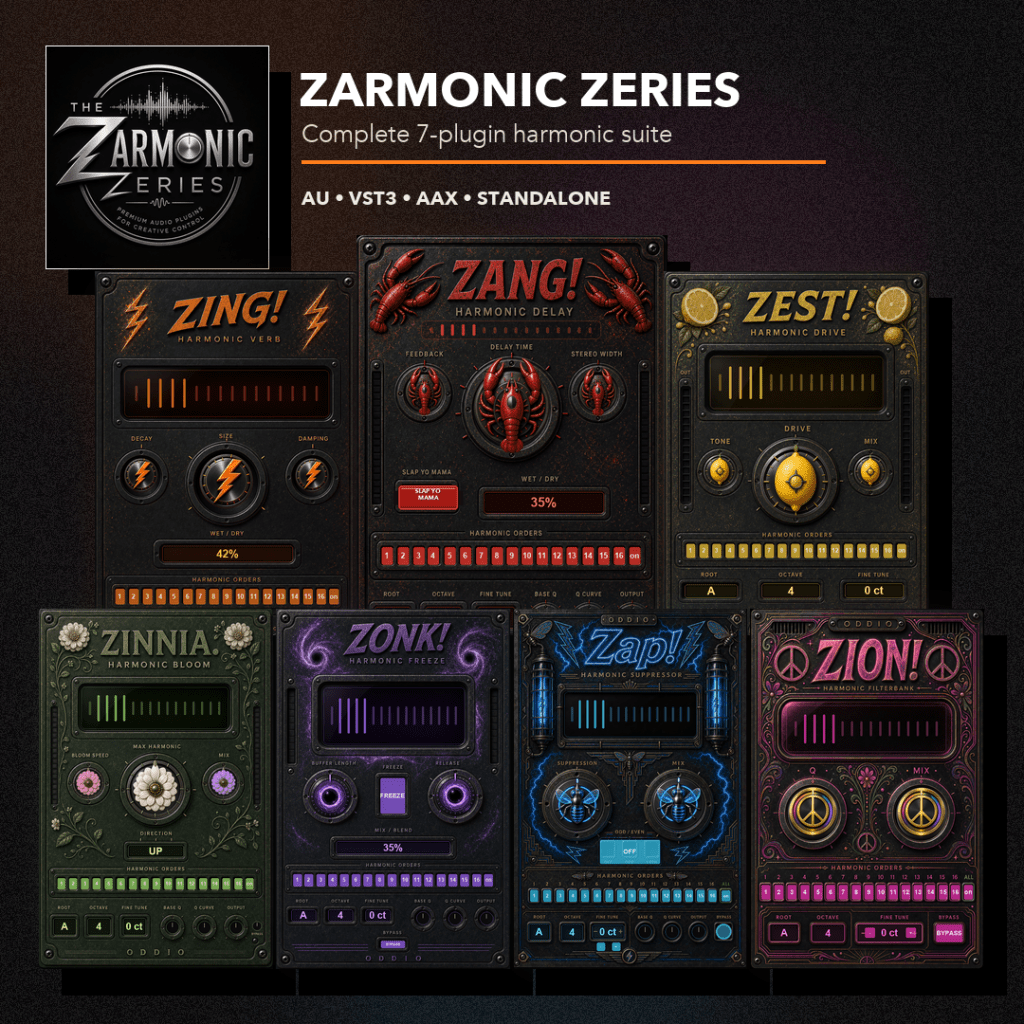
The Zarmonic Zeries explored professional audio production.
Each plugin—including Zing, Zen, Zap, and more —required an interface that not only looked distinctive but communicated its purpose almost instantly to experienced audio engineers.
Unlike many plugins that emulate vintage hardware, these explored entirely new interaction models and psychoacoustic concepts.
The challenge became creating interfaces that felt intuitive even though the processing itself was unconventional.
Rapid iteration made it practical to experiment with visual metaphors, interaction models, harmonic visualization, animation, color psychology, and premium UI styling until each plugin developed its own distinct personality while remaining usable in professional workflows.
The Common Thread
At first glance, these projects appear unrelated.
Industrial analytics.
Professional consulting.
Creative audio software.
Yet they all revealed the same surprising pattern.
The largest bottleneck wasn’t programming.
It was translating ideas into interfaces.
Historically, software development requires multiple layers of communication.
A process improvement architect identifies problems.
Subject matter experts document requirements.
Designers interpret those requirements.
Developers implement the solution.
Stakeholders request revisions.
The cycle repeats.
Every handoff introduces opportunities for misunderstanding.
Working with Codex and Claude fundamentally changed that process.
Instead of describing an interface, waiting for implementation, and then requesting revisions, ideas could be explored almost immediately.
Entire workflows evolved through conversation.
Navigation structures changed.
Information hierarchy improved.
Visual emphasis shifted.
Features appeared, disappeared, and reappeared in stronger forms.
The software became an active design process rather than a static development project.
Codex Began Building Its Own Design Language
One of the most fascinating observations emerged gradually.
As projects became larger, Codex wasn’t simply generating individual screens.
It began helping construct its own framework for making future design decisions.
Reusable components emerged.
Typography standards became consistent.
Spacing systems evolved.
Color palettes became intentional.
Navigation behaviors became standardized.
Icons became unified.
Button treatments became consistent.
Animations followed common principles.
Design tokens, layout conventions, reusable UI patterns, and visual standards gradually replaced one-off decisions.
Eventually, the interface itself became a visual calibration tool.
Rather than asking, “How should this next screen look?” the question became, “Does this new feature conform to the design language we’ve already established?”
Codex effectively began referencing its own previous work to maintain consistency.
In other words, the software wasn’t merely being built—it was building an increasingly sophisticated framework for evaluating future design decisions.
That was an unexpected and remarkably valuable emergent behavior.
Developers Become Even More Valuable
One common misconception is that AI coding assistants replace software developers.
My experience suggests exactly the opposite.
Developers remain indispensable.
Someone still needs to design scalable architectures.
Optimize performance.
Build secure systems.
Maintain databases.
Integrate APIs.
Deploy applications.
Debug complex failures.
Ensure long-term maintainability.
What changes is where engineering effort is invested.
Instead of repeatedly implementing visual revisions, rearranging layouts, integrating design feedback, or refining workflow presentation, developers can devote their attention to solving technically demanding problems.
Architecture.
Security.
Reliability.
Scalability.
Infrastructure.
Performance.
Complex integrations.
Operational bugs.
Edge cases.
Failed execution paths.
Meanwhile, process improvement architects can continuously refine workflows until the software accurately reflects how people actually think and perform their work.
Rather than replacing developers, Codex and Claude maximize the impact of their expertise.
Prompting Is Becoming a Design Discipline
Perhaps the biggest surprise of all was discovering that prompting itself has become a professional skill.
Generic prompts produce generic software.
Specific prompts consistently produce dramatically better results.
The best prompts combine multiple disciplines.
Systems thinking.
Process improvement.
Technical writing.
User experience design.
Information architecture.
Creative direction.
Artistic knowledge also proved unexpectedly important.
Understanding typography, spacing, composition, balance, color psychology, visual hierarchy, accessibility, animation, interaction patterns, and established software design languages made it possible to communicate design intent with much greater precision.
Codex and Claude consistently rewarded specificity.
The clearer the operational objective.
The clearer the workflow.
The clearer the visual direction.
The better the resulting interface.
Prompting is becoming less like giving instructions and more like art direction combined with systems engineering.
As these tools mature, I believe the ability to communicate design intent clearly may become just as valuable as the ability to write software specifications.
Looking Forward
These observations are exploratory rather than definitive.
They arise from three very different projects spanning enterprise software, professional web design, and creative audio production.
Yet all three arrived at the same conclusion.
The greatest opportunity presented by AI coding assistants is not simply faster programming.
It is enabling the people who understand processes best to participate directly in building the tools they envision.
For process improvement architects, this is transformative.
Ideas no longer need to remain confined to requirements documents or whiteboard sketches.
They can be explored, refined, tested, and improved through continuous collaboration with AI.
For developers, this is equally valuable.
As process experts increasingly own workflow exploration and interface refinement, engineering teams can devote more attention to architecture, reliability, scalability, security, integrations, and solving the hardest technical problems.
Rather than replacing human expertise, Codex and Claude amplify it.
If these early experiences are any indication, the future of software development will not be defined by AI working instead of people.
It will be defined by process improvement architects, subject matter experts, designers, software engineers, and AI working together—each contributing where they create the greatest value.
The organizations that thrive won’t necessarily be those with the largest development teams. They will be those that most effectively combine operational knowledge, thoughtful design, engineering excellence, and AI-assisted iteration into a faster, more collaborative approach to building software.
That, in my view, is the real promise of tools like Codex and Claude. They don’t diminish the role of human expertise—they amplify it, bringing the people closest to the problem closer than ever to the solution.
 airefined