How infrastructure expansion, capital allocation, and industrial demand may reveal the trajectory of the AI economy before it becomes obvious

Author’s Note:
This article introduces the basic premise behind the Manufacturing and Infrastructure Expansion Index (MIEI), a framework I use to observe compute demand through infrastructure, manufacturing, and capital-allocation proxy signals. The goal is not to predict stock prices, but to identify evidence of technological expansion before it becomes broadly recognized.
The Strange Path from AI to Transformer Manufacturers
Several months ago I found myself spending an unusual amount of time researching transformer manufacturers.
Not Transformers featuring Shia LaBeouf.
Actual transformers.
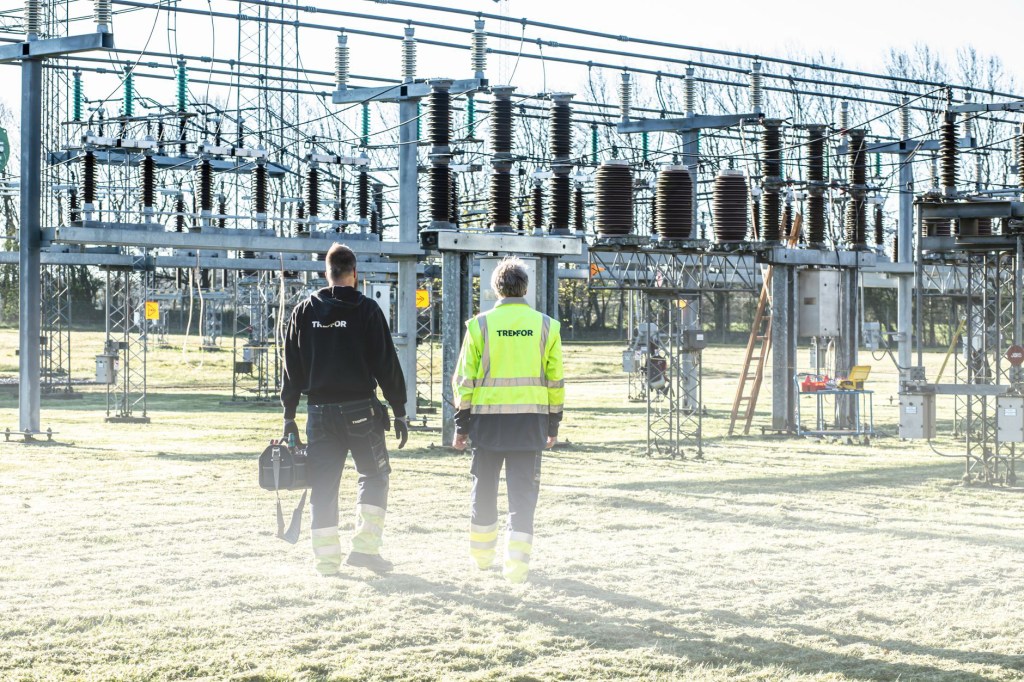
The giant metal boxes quietly humming away in substations, industrial facilities, and power grids that most people never think about until one explodes, catches fire, or takes out half a city block.
This was not where I expected my interest in artificial intelligence to lead.
Like most people, I started with the obvious things. The model releases. The benchmarks. The earnings calls. The endless stream of commentary explaining why AI is either the greatest technological revolution of our lifetime or an overhyped bubble destined to implode under its own weight.
But the deeper I went, the more I found myself paying attention to things that appeared completely unrelated to artificial intelligence.
Datacenters.
Power generation.
Switchgear.
Transmission infrastructure.
Optical networking.
Cooling systems.
Transformer manufacturers.
At first these felt like separate stories. Over time they began to feel like pieces of the same story.
The Problem with Measuring Compute Demand
The realization came from a simple question.
How do we know if demand for AI is actually growing?
Not excitement.
Not headlines.
Not stock prices.
Actual demand.
The problem is that demand for compute is surprisingly difficult to observe directly.
There is no public global dashboard showing real-time AI utilization.
There is no universal metric that tells us exactly how much compute corporations will require next year.
There is no single chart that tells us whether the AI buildout is accelerating, plateauing, or contracting.
Instead, we are forced to infer.
And that isn’t unusual.
Economists do this constantly.
Housing starts help estimate future construction activity. Freight volumes provide clues about industrial production. Electricity consumption can reveal changes in economic activity. None of these measurements are the thing itself. They are indicators. Proxies. Footprints left behind by something larger.
The signal itself is not the outcome.
The signal points toward the outcome.

That observation eventually became the foundation for a framework I call the Manufacturing and Infrastructure Expansion Index, or MIEI.
At its core, MIEI attempts to answer a simple question:
If demand for compute is genuinely expanding, what evidence should we expect to see elsewhere?
Why Proxy Signals Matter
In practical terms, MIEI observes variables such as hyperscaler capital expenditures, datacenter construction activity, optical networking deployment, electrical infrastructure demand, power procurement, manufacturing expansion, and other infrastructure-related indicators.
Individually, these signals may not tell us much.
Collectively, they may provide a useful picture of whether compute demand is accelerating, stabilizing, or contracting.
The framework assumes a simple principle: compute does not exist in isolation.
If corporations need more compute, someone needs to manufacture more processors.
If more processors are deployed, someone needs to build more datacenters.
If more datacenters are built, they require additional networking.
If networking expands, optical infrastructure becomes increasingly important.
If compute usage grows, power consumption grows.
If power consumption grows, utilities, transmission operators, electrical equipment providers, and generation assets suddenly become critical components of the story.
The further you follow the chain, the more interconnected everything becomes.
What initially appears to be a software story slowly transforms into an infrastructure story.
Then a power story.
Then a manufacturing story.
Then a capital allocation story.
The technology economy begins to resemble less a collection of independent companies and more a system of dependencies.
The Infrastructure Beneath AI
One of the things I learned as a teacher is that outcomes are usually lagging indicators.
Parents see report cards.
Teachers see study habits.
A report card tells you what happened.
Study habits often tell you what is about to happen.
The same principle applies to business.
Revenue is important.
Profits are important.
But both are ultimately outcomes.
They are the result of decisions made months or years earlier.
Infrastructure spending is one of those decisions.
When a company commits billions of dollars toward datacenter construction, networking expansion, or power procurement, it is making a statement about future demand. It is allocating capital based on an expectation that additional capacity will eventually be needed.
That expectation may prove correct.
It may prove incorrect.
But the decision itself is real.
A press release costs virtually nothing.
A social media post costs nothing.
A multi-billion-dollar infrastructure project requires conviction.
This is one of the reasons I find the current AI cycle so interesting.
Regardless of what investors believe this week, enormous amounts of capital continue flowing into infrastructure.
Datacenters continue being built.
Power agreements continue being signed.
Transmission upgrades continue being planned.
Networking infrastructure continues expanding.
Semiconductor manufacturing continues scaling.
The physical buildout continues.
And physical buildouts are difficult to fake.
Companies can exaggerate forecasts.
Analysts can revise models.
Narratives can change overnight.
A datacenter either gets built or it doesn’t.
A utility either receives an interconnection request or it doesn’t.
A transformer either gets installed or it doesn’t.
The physical world has a way of cutting through narratives.
MIEI and the Search for Evidence
What makes this even more interesting is that technological revolutions are rarely constrained by demand.
They are constrained by bottlenecks.
When I worked in food service, customer demand was rarely the limiting factor. Sometimes the constraint was labor. Sometimes inventory. Sometimes equipment. Sometimes the physical capacity of the kitchen itself. Solving one problem often revealed another.
The same pattern appears throughout technology.
For years the primary constraint was compute itself.
There simply were not enough advanced accelerators available.
As compute capacity expanded, networking emerged as a greater constraint.
As networking improved, attention shifted toward power.
Today many discussions surrounding AI infrastructure sound less like software conversations and more like utility planning meetings.
That should tell us something.
The pressure is moving.
The bottleneck is moving.
Capital is moving.
And wherever bottlenecks emerge, capital tends to follow.
This is why I view MIEI less as an investment model and more as a detection system.
Its purpose is not to predict stock prices.
Its purpose is to identify whether independent pieces of evidence are pointing toward the same conclusion.
One signal may be noise.
Ten independent signals deserve attention.
A datacenter announcement may not mean much by itself.
Neither does a transmission project.
Neither does an electrical equipment backlog.
Neither does a networking upgrade.
But when all of them begin moving in the same direction at the same time, a pattern begins to emerge.
The goal is not certainty.
The goal is probability.
Following the Footprints
The future remains uncertain. It always will.
History is filled with examples of technological revolutions that created both extraordinary winners and spectacular failures. Railroads transformed America while bankrupting countless investors. The internet reshaped the global economy while destroying hundreds of companies that arrived too early, executed poorly, or simply guessed wrong.
Being correct about a trend is not the same thing as correctly identifying the eventual winners.
But before we can identify winners, we first need evidence that the trend itself is real.
That is what interests me most.
Not the arguments.
Not the narratives.
Not the forecasts.
The evidence.
The footprints.
The signals hidden inside the infrastructure.
Because one thing history repeatedly demonstrates is that major economic transformations tend to leave evidence long before they become universally accepted.
Sometimes that evidence appears in steel production.
Sometimes it appears in housing starts.
Sometimes it appears in freight traffic.
And sometimes, unexpectedly, it appears in transformer manufacturers.
The longer I study the current cycle, the more convinced I become that demand for compute leaves footprints throughout the broader economy.
The challenge is not finding those footprints.
The challenge is recognizing what they mean before everyone else does.

